


Resources
Access resources for every step of the treatment journey
Jump to section:

Genetic testing
Videos for HCPs
HCP resources
Patient resources

GENETIC TESTING
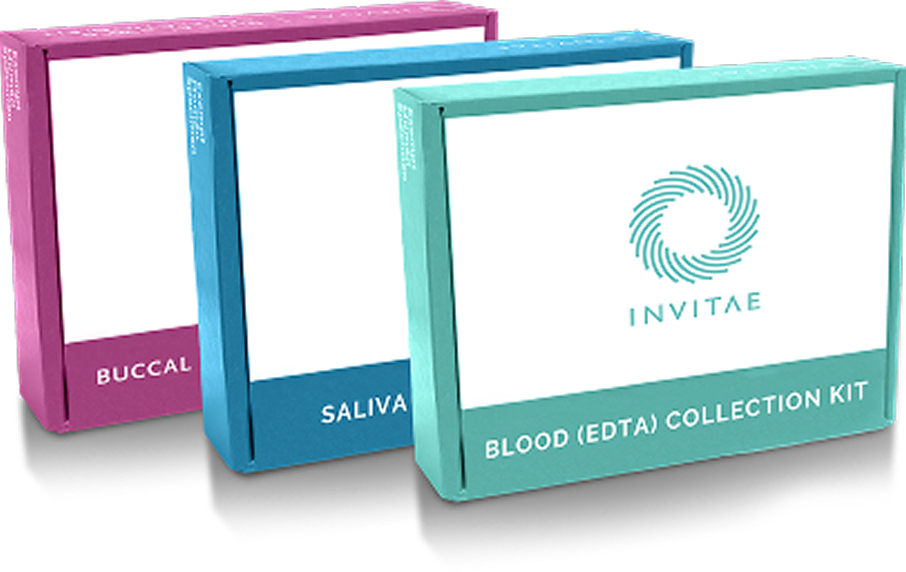
If you suspect your patient may have a PI, genetic testing that includes APDS can help inform a timely diagnosis.
Sponsored genetic testing and genetic counseling are available for eligible patients and their families, regardless of insurance coverage or financial need.
Learn more about a sponsored genetic testing option.
Order a genetic test

Eligibility criteria apply.
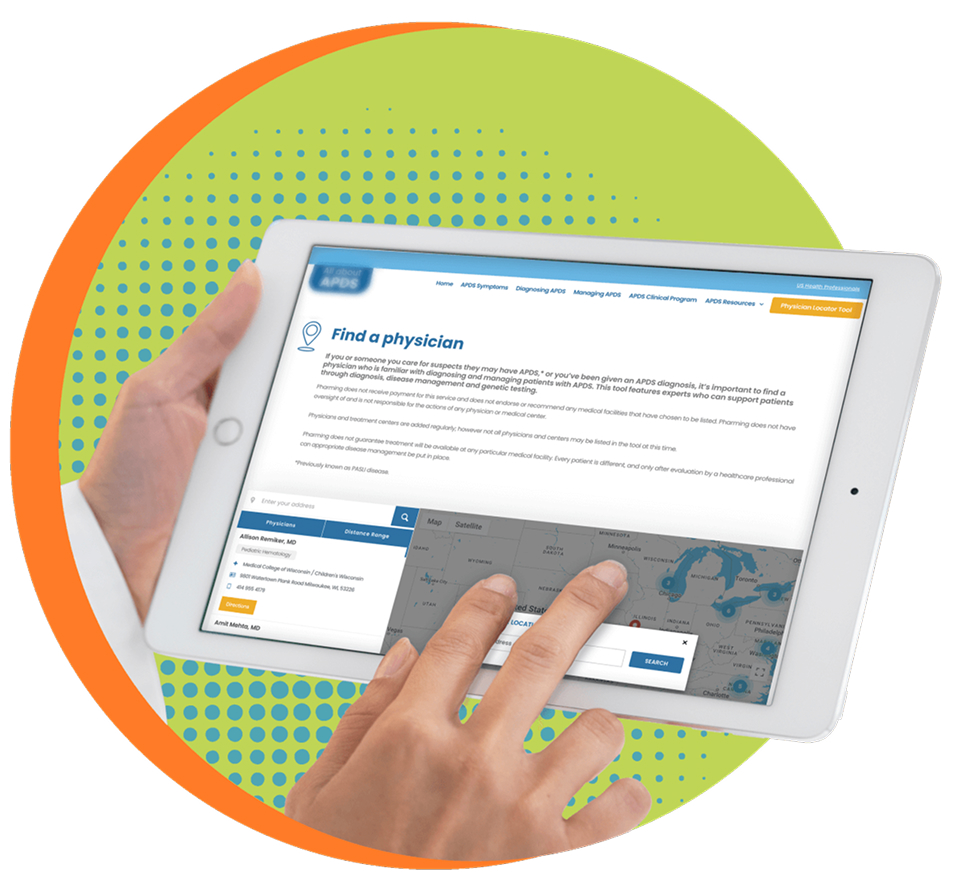
Locate a clinician who understands APDS
APDS is a rare, genetic inborn error of immunity (IEI), and as a result, a limited number of clinicians have had first-hand experience with APDS.
Find medical professionals who have experience diagnosing and managing APDS near you.
Search now
VIDEOS FOR HCPs
Watch these educational videos

5:44
Joenja’s mechanism of action
Watch Joenja in action and gain a clearer understanding of how Joenja targets the underlying immune defect in APDS.
View transcript
Activated phosphoinositide 3-kinase delta syndrome, or APDS, is a rare progressive primary immunodeficiency that was first characterized in 2013.
Patients with APDS experience a range of diverse signs and symptoms, which can vary among patients, even among family members with the same genetic variant.
The underlying immune defect caused by APDS is hyperactivity along the PI3 kinase delta signaling pathway.
Under normal circumstances, the PI3 kinase delta signaling pathway regulates B and T cell differentiation and development.
PI3 kinase delta is associated with different types of receptors, including B cell receptors and T cell receptors in the membrane.
When the receptor is stimulated, PI3 kinase delta transmits this signal by converting PIP2 to PIP3, which in turn activates AKT via PDK1.
AKT is a kinase that serves as a central regulator in many cellular processes.
Among many targets, AKT inhibits FOXO and activates mTOR, which stimulates cell proliferation, growth, and differentiation.
In patients with APDS, a genetic variant in either one of the genes encoding PI3 kinase delta leads to hyperactivity, causing a loss of control of this signaling pathway.
Because of this, AKT is always active and prevents FOXO gene expression, stimulating growth and proliferation through mTOR.
Hyperactive PI3 kinase delta leads to underdeveloped B cells and T cells and uncontrolled proliferation of these immature cells.
These then accumulate in lymphatic organs, leading to swelling of lymph nodes, the spleen, and the liver.
In APDS, a hyperactivity of the PI3 kinase delta pathway leads to proliferation of immature B and T cells; therefore, B and T cells cannot perform their function of fighting infections in the body.
Until recently, there was no FDA-approved treatment specifically indicated for APDS.
Now, there’s Joenja, the first and only selective PI3 kinase delta inhibitor indicated for the treatment of APDS.
Leniolisib, the active ingredient in Joenja, corrects the underlying immune defect caused by APDS by inhibiting hyperactive PI3 kinase delta, thereby modulating downstream FOXO and mTOR signaling.
This action helps restore balance to the dysregulated pathway.
Leniolisib helps to restore B cell and T cell development and reduce lymphadenopathy by restoring immune trafficking throughout the body.
Joenja delivers a targeted approach to regulate the hyperactive signaling pathway and is the first and only therapy that treats APDS by correcting the underlying immune defect caused by APDS.
To learn more about Joenja, visit www.joenja.com
On Screen:
Joenja® (leniolisib) is a kinase inhibitor indicated for the treatment of activated phosphoinositide 3-kinase delta (PI3Kδ) syndrome (APDS) in adult and pediatric patients 12 years of age and older.
Important Safety Information
Verify pregnancy status in females of reproductive potential prior to initiating treatment with Joenja.
Joenja may cause fetal harm when administered to a pregnant woman. Advise patients of the potential risk to a fetus and to use highly effective methods of contraception during treatment with Joenja and for 1 week after the last dose.
Additionally, advise women not to breastfeed during treatment with Joenja and for 1 week after the last dose.
Live, attenuated vaccinations may be less effective if administered during Joenja treatment.
Joenja may cause hypersensitivity reaction(s), including anaphylaxis. Advise patients to discontinue Joenja and to seek immediate medical attention if they develop any signs and symptoms of serious allergic reactions.
Use of Joenja in patients with moderate to severe hepatic impairment is not recommended. There is no recommended dosage for patients weighing less than 45 kg.
Avoid co-administration of Joenja with other medications known to be strong CYP3A4 inhibitors, strong or moderate CYP3A4 inducers, or BCRP, OATP1B1, and OATP1B3 substrates.
The most common adverse reactions (incidence >10%) were headache, sinusitis, atopic dermatitis, and weight gain.
Seven (33%) patients receiving Joenja developed an absolute neutrophil count (ANC) between 500 and 1500 cells/microL. No patients developed an ANC <500 cells/ microL and there were no reports of infection associated with neutropenia.
Before prescribing Joenja, please read the full Prescribing Information.
Close Transcript

51:54
Learn about APDS and Joenja
Dr Hartog, a leading allergy and immunology specialist and clinical expert on APDS, discusses a real life patient cas…

58:42
Joenja targeting the mechanics of APDS
Dr Mehta, a hematologist/oncologist and leading clinical expert on APDS, explains how Joenja targets the mechanics o…
HCP RESOURCES
Resources for you and your office

An overview of Joenja for HCPs
A comprehensive brochure providing a brief introduction to APDS and a detailed description of Joenja that includes an explanation of how Joenja works, the clinical data on the efficacy and safety of Joenja, and Joenja dosing and administration information.
Download overview


Joenja patient case vignettes
Explore patients’ experiences with Joenja to gain insights about the treatment and learn how it impacted patients with APDS who were observed for 6 years.
Download vignettes

Get in touch
Sign up for emails to get the latest news and stay up to date on everything Joenja.
PATIENT RESOURCES
Resources for your patients
Patient brochure
Learn more about Joenja results and dosing.
Download brochure

Patient enrollment form (APDS Assist)
Complete the enrollment form below and submit it to APDS Assist.
Download form
Full list of patient resources available on Joenja.com
Help your patients throughout their treatment journey by sharing helpful resources like the administration guide and Joenja brochure.
Advocacy groups
Patients with APDS may find it helpful to know there are hundreds of other people in the US living with APDS. Click on each logo below to learn about patient advocacy groups that are dedicated to supporting the APDS community.




Connect with Joenja
→
APDS Assist
→
APDS, activated PI3K delta syndrome.